Basketball has produced extraordinary athletes, but some records are so remarkable that they may remain untouched for generations. And the best basketball players from all across the world are available at 1xBet online, where you may also bet on whether a record will be broken too.
The NBA’s history is filled with such achievements, particularly from legends like:
● Wilt Chamberlain;
● John Stockton;
● and Bill Russell.
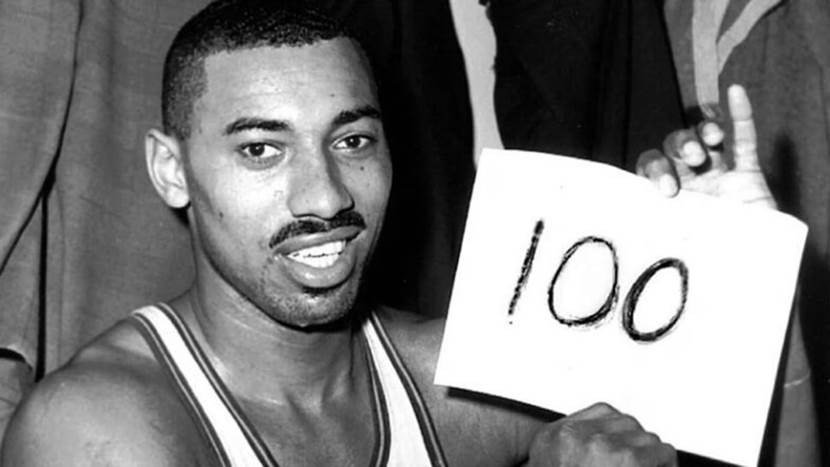
Perhaps the most famous is Wilt Chamberlain’s 100 points in a single game. On March 2, 1962, Chamberlain scored exactly 100 points for the Philadelphia Warriors against the New York Knicks. He also grabbed 25 rebounds and played all 48 minutes. More than six decades later, the record still stands. Even modern stars capable of scoring 60 or 70 points have come nowhere close to 100. Visiting the online 1xBet platform to bet on high-scoring basketball games is also a great idea.
Another astonishing Chamberlain record is his 50.4 points per game during the 1961-62 season. He played all 80 games and averaged 48.5 minutes per game, becoming the only player in NBA history to average at least 50 points over an entire season. In today’s game, with more emphasis on team-oriented offenses and player rest, matching this average would be extremely difficult.
Rebounds, assists and championships
Chamberlain also owns the NBA’s single-game rebounding record: 55 rebounds. He achieved it against Bill Russell and the Boston Celtics in 1960. Only a handful of players have ever reached 40 rebounds in a game, and Chamberlain and Russell account for the overwhelming majority of those performances.
A different kind of seemingly unreachable record belongs to John Stockton, who finished his career with 15,806 assists. Stockton played 19 seasons with the Utah Jazz and was remarkably consistent as both a passer and scorer. The gap between him and the next players on the career assists list demonstrates just how difficult this record would be to surpass.
Bill Russell’s 11 NBA championships may be even harder to imagine today. Russell won all 11 titles with the Boston Celtics during a 13-year career, including eight consecutive championships from 1959 through 1966. Winning one championship is difficult; winning 11 requires an extraordinary combination of talent, longevity and team success.
Finally, A.C. Green’s 1,192 consecutive games played represents an almost impossible level of durability. His streak lasted from 1986 to 2001. In an era when teams carefully manage player workloads, injuries and rest, breaking such a record seems increasingly unlikely.
Why Are These Records So Difficult to Break?
Basketball records become especially difficult to challenge when they combine extraordinary production with unusual circumstances. A player may need to maintain an elite level of performance for an entire game, season, or career while also staying healthy and consistently earning playing time. Changes in coaching, competition, tactics, and player workload can make older records even harder to approach.
Scoring records are a good example. Modern basketball has produced many outstanding offensive players, but a 100-point game requires an exceptional combination of shot-making, minutes, pace, and opportunity. A player must remain highly efficient while continuing to receive enough possessions to reach a historic total. That combination makes Chamberlain’s single-game mark one of the most recognizable achievements in professional basketball.
Career records present a different challenge. John Stockton’s assist total was built over 19 seasons of remarkable consistency. A player trying to surpass a record of that scale would need to remain healthy, play at a high level for many years, and consistently operate in a role that creates large numbers of assist opportunities.
Longevity and Durability Records
Records based on durability can be just as difficult as scoring or statistical achievements. A long consecutive-games streak requires a player to avoid serious injuries while remaining available through an enormous number of regular-season games. A.C. Green’s 1,192 consecutive games therefore represents more than simple availability; it reflects years of physical durability and consistency.
The same principle applies to championship records. Winning a title requires individual ability, but championships are team achievements. Bill Russell’s 11 NBA championships combined elite defense, leadership, roster quality, coaching, and sustained team success over many seasons. Modern competitive balance makes another run of that length extremely difficult to reproduce.
Can These Records Ever Be Broken?
It is impossible to say that any sports record can never be broken. Basketball continues to evolve, and future players may benefit from different strategies, training methods, rules, schedules, or playing styles. A record that appears unreachable today could eventually be challenged by an extraordinary athlete or team.
However, the records discussed here have an important advantage: they were produced at an exceptional level and often required a rare combination of talent, opportunity, health, consistency, and team success. That is why they remain useful benchmarks when comparing different generations of basketball players.
What Makes a Basketball Record “Unbreakable”?
A record may appear nearly unbreakable when several factors work together. These can include an unusually high statistical total, an exceptionally long career, a remarkable streak of availability, or a championship run that would require repeated postseason success. The more conditions a player must satisfy at the same time, the smaller the chance that another athlete will reproduce the achievement.
For fans, these records also provide a way to understand how the game has changed. Comparing historic achievements with modern basketball highlights differences in pace, player usage, team strategy, roster management, and competitive environments. Some records may eventually fall, while others may continue to stand as historical milestones for decades.
Read More Blogs Like This On Shayaribites.com. Also, Join WhatsApps Group For More Updates.