Romelu Lukaku is one of the most recognizable Belgian footballers of his generation. Known for his physical strength, powerful finishing, intelligent movement, and ability to lead the attacking line, the striker has experienced a fascinating career across Belgium, England, and Italy. From becoming a teenage sensation at Anderlecht to representing some of Europe’s biggest clubs, Lukaku’s journey has included record-breaking achievements, major trophies, difficult periods, and impressive comebacks. His story demonstrates how determination and adaptability can shape a career at the highest level of professional football.
Romelu Lukaku’s Early Life and Passion for Football
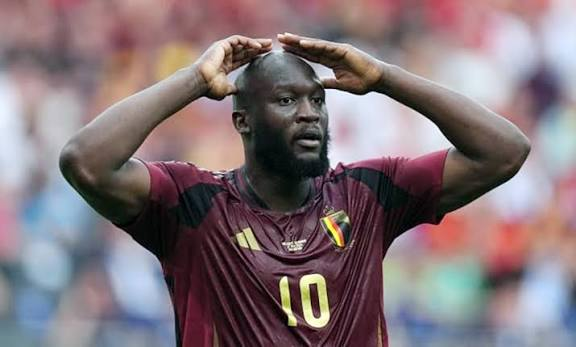
Romelu Menama Lukaku Bolingoli was born on May 13, 1993, in Antwerp, Belgium. Football was already an important part of his family because his father, Roger Lukaku, was a professional player who represented Zaire internationally.
Lukaku developed a passion for the sport at an early age. As a youngster, his combination of size, strength, and goalscoring ability quickly made him stand out. He progressed through youth teams including Rupel Boom and Lierse before eventually joining Anderlecht’s academy.
His development was remarkably fast. Lukaku made his senior debut for Anderlecht shortly after turning 16, beginning a professional career that would eventually take him to several of Europe’s most competitive leagues.
Anderlecht and the Rise of a Teenage Goalscorer
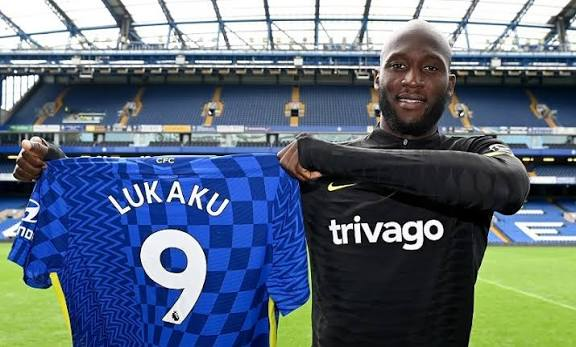
Lukaku wasted little time making an impression in Belgian football. During the 2009/10 campaign, the young striker became the leading scorer in Belgium’s top division as Anderlecht captured the league championship.
For a teenager competing against experienced professionals, this was an extraordinary achievement. His performances immediately attracted interest from clubs outside Belgium.
Although his physical strength was the most obvious characteristic, Lukaku already demonstrated qualities beyond his size. He could attack space, protect possession, finish inside the penalty area, and use his speed effectively during counterattacks.
His success convinced Chelsea to bring him to England in 2011.
Chelsea Move and Premier League Development
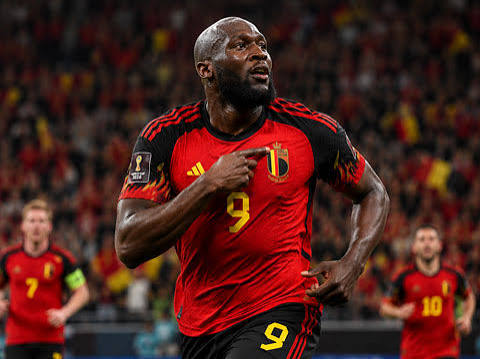
Moving to Chelsea represented a major step in Lukaku’s career. However, regular first-team opportunities were difficult to secure during his initial period in London.
Loan spells subsequently became crucial to his development. At West Bromwich Albion, Lukaku demonstrated that he could score consistently in the Premier League. He then moved to Everton on loan, where his combination of power and finishing made him an important attacking weapon.
Supporters following European football through cà khịa tv can appreciate how Lukaku’s career evolved through different tactical environments. Rather than immediately becoming a superstar at Chelsea, he needed regular football elsewhere to develop into a more complete Premier League striker.
Everton eventually signed him permanently in 2014.
Becoming a Premier League Star at Everton
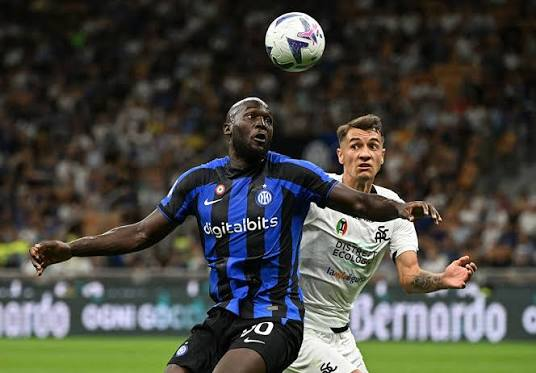
Lukaku’s years at Everton played an enormous role in establishing his reputation. With consistent playing time, he became one of the Premier League’s most productive forwards.
His style was particularly effective when Everton could move the ball forward quickly. Lukaku possessed enough speed to attack defenders in open space while having the strength necessary to compete with physically imposing centre-backs.
He also developed his movement inside the penalty area. Instead of waiting for the ball, he became increasingly effective at identifying spaces between defenders and anticipating crosses.
His performances eventually earned him another major transfer, this time to Manchester United in 2017.
Manchester United and the Pressure of Expectations
Playing for Manchester United brought a different level of attention and expectation. Lukaku was immediately expected to deliver goals for one of the world’s most famous clubs.
He enjoyed productive periods at Old Trafford and scored important goals, but his overall time at United generated mixed assessments. Critics sometimes questioned his first touch and performances in certain high-profile matches, while supporters pointed to his goalscoring record and physical contribution.
The experience demonstrated one of the realities of playing for elite clubs: performances are examined in enormous detail, and even productive strikers can face constant criticism.
After two seasons in Manchester, Lukaku decided to continue his career in Italy.
Inter Milan and Lukaku’s Outstanding Revival
Joining Inter Milan in 2019 proved to be one of the most important decisions of Lukaku’s career.
Under Antonio Conte, the Belgian became the focal point of Inter’s attack. The tactical system made excellent use of his physical qualities, direct running, movement, and ability to combine with teammates.
His partnership with Lautaro Martínez became particularly effective. While Lukaku could occupy defenders and attack space, Martínez provided mobility and technical combinations around him.
The partnership contributed significantly to Inter’s success. In the 2020/21 season, the club won Serie A, ending Juventus’ long period of domestic dominance.
Lukaku’s performances during this period changed perceptions of him. He was no longer viewed simply as a physically powerful striker; his link-up play, tactical intelligence, and decision-making had noticeably improved.
Chelsea Return and Another Challenging Chapter
In 2021, Lukaku returned to Chelsea in a major transfer after his outstanding performances in Italy.
Expectations were extremely high. His second Chelsea spell, however, did not develop as successfully as anticipated. Tactical difficulties, injuries, and other complications prevented him from reproducing his Inter form consistently.
Lukaku subsequently returned to Inter on loan before later spending a season with Roma.
These periods highlighted the importance of tactical compatibility. A striker may possess excellent individual qualities, but his performances can still depend heavily on how a team creates chances and structures its attack.
Why Lukaku Is Such a Difficult Striker to Defend
At his best, Lukaku combines several attributes that defenders dislike facing. His physical power allows him to protect the ball, while his acceleration makes him dangerous when attacking open space.
He is also a natural penalty-area goalscorer. Many of his goals come from intelligent positioning rather than spectacular individual moves.
Lukaku’s left foot is another major weapon. When he receives the ball in favorable areas, he can produce extremely powerful finishes with relatively little preparation.
His development in Italy also improved his ability to play with his back to goal and bring teammates into attacking moves.
Lukaku’s Importance to the Belgian National Team
Lukaku’s international career forms another major part of his legacy. He became Belgium’s all-time leading men’s goalscorer and played during the country’s celebrated generation alongside stars such as Kevin De Bruyne and Eden Hazard.
Belgium’s third-place finish at the 2018 FIFA World Cup represented one of the high points of that generation. Lukaku contributed four goals during the tournament as Belgium achieved their best World Cup finish.
His international scoring record demonstrates remarkable consistency across many years and different competitions.
Understanding Football Through Broader Statistics
Modern football analysis involves much more than simply counting goals. Supporters increasingly examine expected goals, shooting efficiency, progressive passes, possession patterns, defensive statistics, and team performance.
Domestic league information can also provide useful context. For example, fans interested in South American football may check the bảng xếp hạng bóng đá brazil to understand which clubs are competing for the title, continental qualification, or survival.
League tables become more informative when combined with recent form, goals scored and conceded, home and away records, injuries, and fixture difficulty. No individual statistic can completely explain a team’s performance, so combining different sources of information generally produces a more balanced picture.
Lukaku’s Legacy in Modern Football
Romelu Lukaku’s career cannot be summarized by one club or one season. His journey has included spectacular goalscoring periods as well as challenging moments when expectations were difficult to meet.
What makes his story interesting is his ability to continue adapting. He developed from a physically dominant teenage striker into a forward capable of linking play, reading defensive structures, and contributing within sophisticated tactical systems.
His strongest periods, particularly with Everton, Inter Milan, and Belgium, demonstrated just how difficult he can be to stop when operating in a system suited to his strengths.
Conclusion
Romelu Lukaku’s journey from Anderlecht’s academy to elite European football is a story of talent, resilience, and constant evolution. He became a teenage champion in Belgium, established himself as a prolific Premier League striker, reached another level at Inter Milan, and built an exceptional scoring record for his national team.
Although his career has included difficult chapters, Lukaku has repeatedly responded by adapting to new clubs, leagues, and tactical demands. His strength and powerful finishing initially made him famous, but movement, experience, and tactical awareness ultimately turned him into a far more complete forward. For Belgian football, Lukaku’s goals and longevity ensure that his name will remain an important part of the country’s football history.
Read More Blogs Like This On Shayaribites.com. Also, Join WhatsApps Group For More Updates.