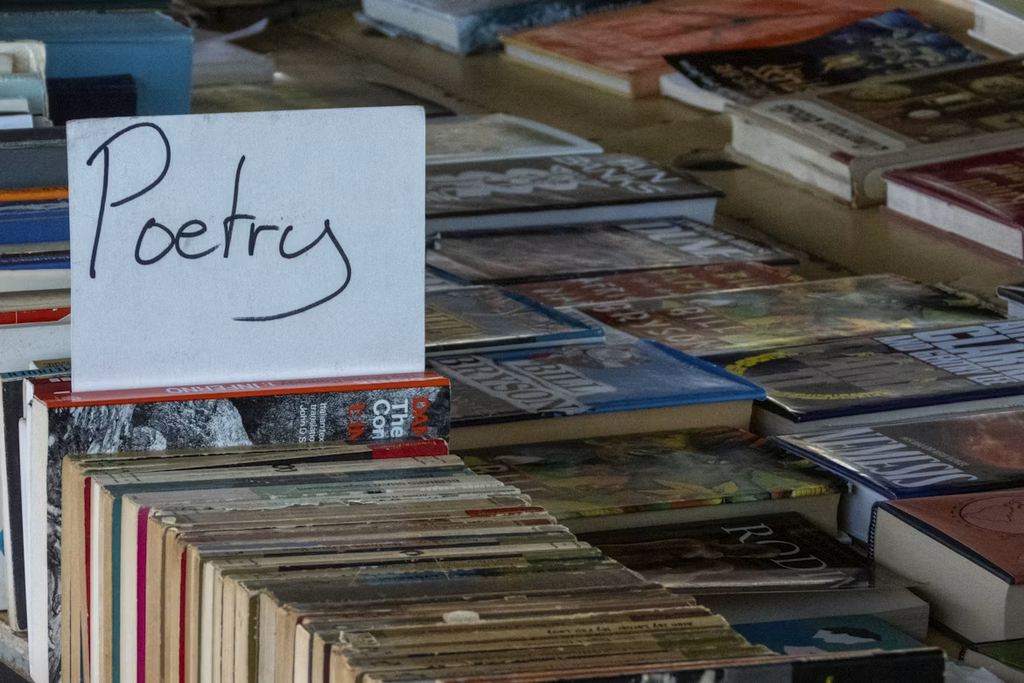
Hindi poetry has never shied away from danger. From medieval dohas to lines typed out on a phone at midnight, sahas and himmat, the two common words for courage, sit beside khatra, the word for risk, as though the pair were always meant to travel together. Kabir’s dohas, still recited five centuries after they were composed, often treat boldness as a form of honesty, the nerve required to say an uncomfortable truth out loud. Centuries of verse have a pattern: poets rarely praise courage by itself. They pair it with the danger it answers.
Long before smartphones existed, poets reached for the language of the gambling table to describe an uncertain life. Verses built on baazi, the word for wager, treat existence as a bet nobody gets to refuse, and daanv lagana, staking everything on a single throw, turns up again and again across dohas about fate and nerve.
That same restless arithmetic shows up whenever a rising number forces a snap decision, the pull behind the vortex aero game login page that many casual players open just to watch a curve climb before deciding whether to hold on or cash out. The poets had a different table in mind, yet the racing heartbeat they described translates rather well.
Sahas and Himmat: Words That Carry Weight
Classical Hindi offers more than one word for courage, and poets choose between them with care.
- “Sahas” leans formal, often reserved for a hero facing an army or a fate nobody else would choose.
- “Himmat” sits closer to daily speech, the kind of nerve needed to speak up during a family argument.
- “Jigra”, borrowed from street Hindustani, treats courage as something physical, felt low in the chest rather than reasoned out on paper.
One old saying captures the connection well: “Himmat-e-marda, madad-e-khuda”, meaning roughly, “Where there is courage, help follows.” Hindi and Urdu speakers quote it so often that many forget it began as a proverb, not a poem.
Poets Who Turned Fear Into a Public Stand
Ramdhari Singh Dinkar built much of his career on this pairing of fear and resolve. His verses in the veer ras tradition, poetry written to stir heroic feeling, treat hesitation as the real enemy, worse than any threat from outside.
Subhadra Kumari Chauhan took the theme further with Jhansi Ki Rani, a poem about Rani Lakshmibai that generations of Indian schoolchildren still memorise. Its refrain, remembered even by readers who forget the rest of the poem, turns a single historical stand into one of the clearest statements of courage that Hindi poetry has produced.
Harivansh Rai Bachchan took a quieter route to the same idea. His well-known lines about a tree that never begs for shade returned again and again to a simple argument: dignity requires the courage to stand alone. That image still appears in wedding speeches and school textbooks alike, decades after it was written, because refusing help is its own kind of risk.
The Ghazal’s Quiet Version of Courage
Not every brave verse shouts. The ghazal, built from independent couplets called “sher”, often frames courage as a private decision: loving someone despite likely heartbreak or staying honest in a conversation that could easily end a friendship. The form itself rewards restraint, so the risk sits inside one sharp line rather than a dramatic scene.
Why the Theme Still Feels Current
Social media has not changed this instinct so much as sped it up. The small risks poets keep returning to are strikingly ordinary: quitting a stable job for something uncertain, moving to a new city without a safety net, or telling someone how you feel before the moment passes.
The vocabulary describing these moments is older than the phones people type it on, borrowed straight from verses written for very different stakes.
Risk and courage keep appearing together in Hindi poetry because uncertainty never really goes away, only its shape changes from one generation to the next. Each poet adds a line, a metaphor, or a single sharp word, and the pairing keeps getting passed forward largely intact.
Read More Blogs Like This On Shayaribites.com. Also, Join WhatsApps Group For More Updates.